Blue Fire Ijen 2026: Visitor Access Update
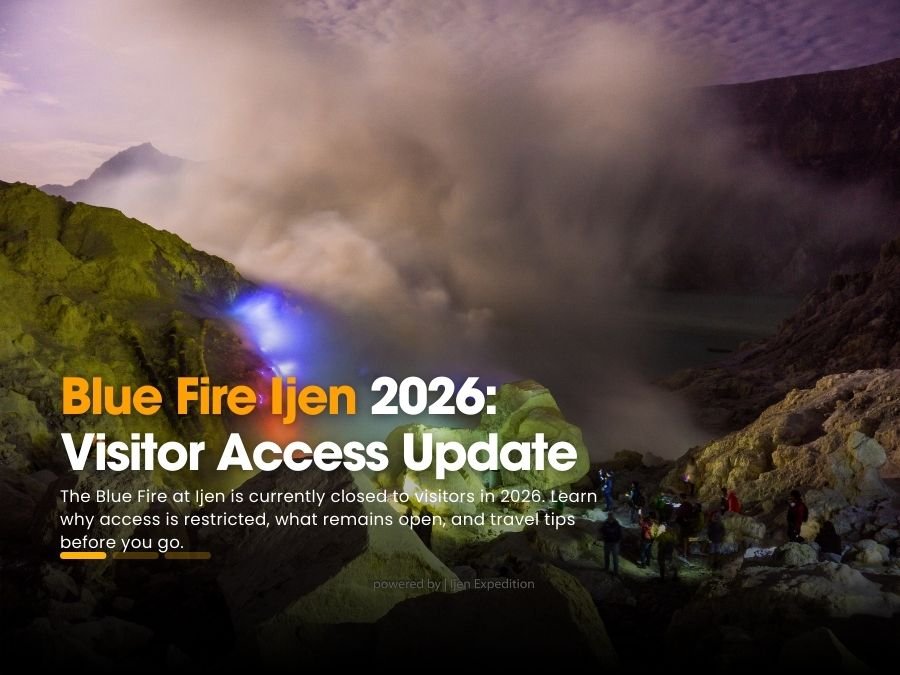
Ijen Blue Fire 2026 Update: Limited & Conditional Access
Last Updated: February 2026
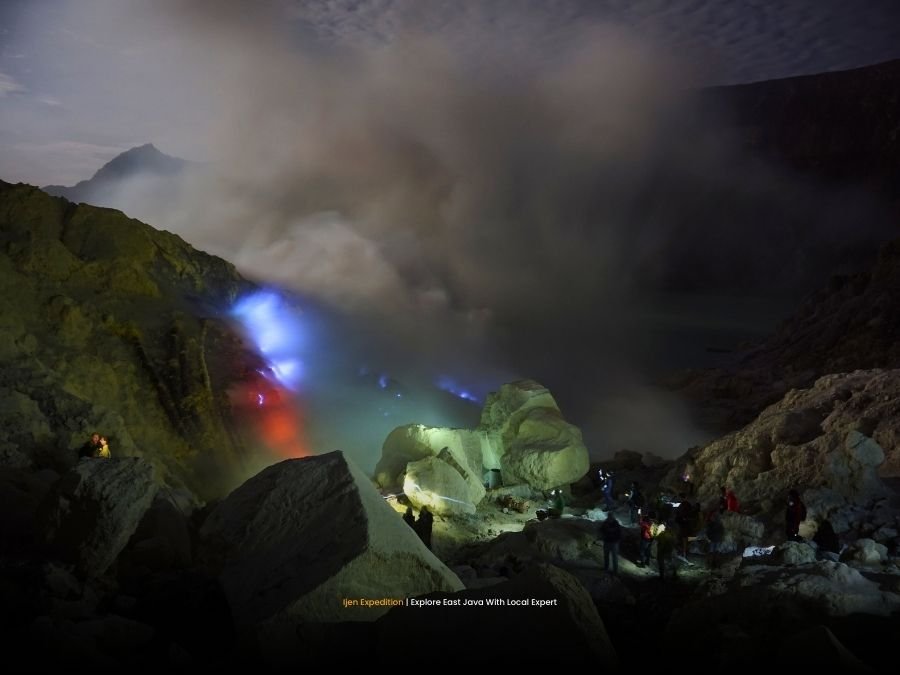
The legendary Blue Fire phenomenon at Kawah Ijen — one of the rare places on Earth where sulfuric gases burn and create an electric-blue flame — is subject to daily safety assessments in 2026. Access to the crater descent area depends on volcanic gas levels, weather conditions, and official safety evaluations, and is not guaranteed.
On some days, access may be permitted under controlled conditions. On other days, the descent route may be restricted without prior notice. Decisions are based on real-time monitoring and visitor safety considerations.
If you are planning a trip to Mount Ijen, this article explains:
The current access situation of the Blue Fire area
Why access may change without notice
What sections of the volcano remain accessible
Safety updates and operational considerations
Whether visiting Ijen in 2026 is still worthwhile
Current Access Situation in 2026
As of February 2026, access to the Blue Fire area is not permanently closed, but it is not guaranteed. Entry to the crater descent depends on gas concentration levels and on-site authority decisions at the time of your visit.
Visitors should understand that even if access is allowed on one day, it may be restricted the next.
Why Blue Fire Visibility Is Currently Restricted
Since late 2025, access to the sulfur vent area has been frequently restricted due to safety evaluations and infrastructure adjustments. As a result, Blue Fire visibility depends on daily clearance and may not be accessible during many visits.
Key Situation Update:
- Access to the fumarole (gas vent) area is subject to daily approval
- Visibility of Blue Fire is not guaranteed
- There is no officially confirmed reopening schedule for unrestricted access as of 2026
Authorities continue monitoring crater conditions before allowing visitors to descend under safe conditions.
Why the Blue Flame Is Not Appearing
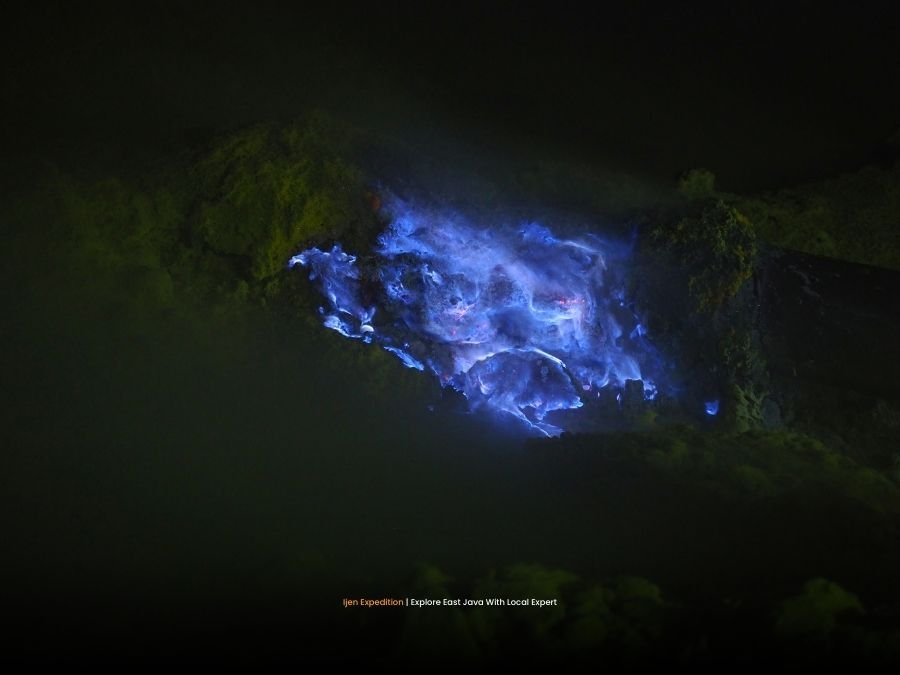
The Blue Fire is not lava. It is a chemical combustion reaction.
Here’s how it works:
- High-temperature sulfuric gases (above 600°C) escape from vents.
- When these gases come into contact with oxygen, they ignite.
- Liquid sulfur flows and burns, creating visible blue flames.
When gas pressure, vent structure, or sulfur flow patterns change, the combustion effect may become less visible or may not consistently form in areas accessible to visitors. Operational adjustments and safety controls can also influence whether the phenomenon can be observed on a given day.
In short:
The volcano remains active, but visible blue flames are not consistently observable in publicly accessible areas under current conditions.
Visitor Access: What Is Still Open
Although access to the Blue Fire descent is frequently restricted, the main trekking route remains operational.
🔹 Crater Rim Trekking Is Open
Visitors can still:
- Hike to the crater rim
- Watch sunrise over the acidic turquoise lake
- Observe volcanic landscapes
- See sulfur mining activity from safe distances
The crater lake — one of the most acidic in the world — remains the highlight of the experience.
🔹 Standard Hiking Schedule
- Entry gate typically opens around 1:00–2:00 AM
- Trek duration: 1.5–2 hours to the rim
- Elevation: Approximately 2,799 meters above sea level
Night hiking is still allowed, but descent to the crater floor is restricted.
🔹 Monthly Conservation Closures
In addition to the Blue Fire restriction, Kawah Ijen continues implementing:
- Scheduled monthly closure days
- Environmental conservation programs
- Gas monitoring and ecosystem management
These measures are part of long-term sustainability efforts.
Visitor Safety Remains the Priority
Volcanic activity at Ijen is currently at Normal Status (Level I). However, natural hazards remain:
- Sulfur dioxide (SO₂) gas exposure
- Steep, uneven volcanic terrain
- Sudden weather changes
Safety Recommendations
Visitors should:
- Use certified respirators (not cloth masks)
- Wear proper hiking shoes
- Carry headlamps
- Stay hydrated
- Follow official ranger instructions
The restriction of Blue Fire access is a preventive safety measure, not a sign of eruption danger.
Should You Still Visit Ijen in 2026?
Yes — Ijen remains one of the most dramatic volcanic landscapes in Indonesia.
Even without Blue Fire, visitors can experience:
🌄 What Makes It Worth It
- Sunrise over the world’s largest acidic crater lake
- Otherworldly volcanic scenery
- Active sulfur mining culture
- Cool mountain climate
- Challenging yet rewarding night trek
Many travelers find the sunrise panorama alone justifies the journey.
Travel Planning Advice for 2026
Before visiting:
- Confirm current access rules with licensed operators
- Check monthly closure schedules
- Prepare physically for uphill trekking
- Understand that Blue Fire viewing is not guaranteed and depends on daily safety clearance
If your primary goal is Blue Fire photography, consider flexible travel dates and confirm real-time conditions before departure.
Frequently Asked Questions
❓ Can I see Blue Fire in 2026?
Access depends on daily safety clearance. The descent to the Blue Fire area is frequently restricted, and viewing is not guaranteed.
❓ Is Kawah Ijen fully closed?
No. Hiking to the crater rim is open, and sunrise tours continue operating. Visitors can still join our Mount Ijen Sunrise Tour to safely experience the crater lake and panoramic sunrise with a licensed guide.
❓ Is the volcano erupting?
No. Volcanic status is currently normal (Level I).
❓ When will Blue Fire reopen?
There is currently no official reopening date for the Ijen Blue Fire area. Access will depend on safety evaluations and gas monitoring by local authorities. Visitors are advised to check the latest updates before planning their trip.
Current Situation & Travel Outlook
Although access to the Blue Fire descent is frequently restricted in 2026, Kawah Ijen remains fully operational for crater rim trekking and sunrise experiences. The restriction applies specifically to the crater floor descent where sulfur combustion is normally visible.
This access limitation is a preventive safety and infrastructure measure — not a volcanic emergency.
For travelers, the key takeaway is simple:
Blue Fire visibility is not guaranteed and depends on daily approval.
Crater rim hikes and sunrise tours remain open.
The landscape, acidic lake, and volcanic scenery are unchanged.
Safety monitoring continues under official supervision.
If your primary objective is witnessing the Blue Fire itself, it is advisable to confirm real-time access conditions before traveling. However, if you are seeking a dramatic volcanic hike, sunrise over one of the world’s most unique crater lakes, and a raw geological experience, Mount Ijen in 2026 still delivers exceptional value.
As always, confirm the latest operational status before traveling and book with experienced local operators who monitor real-time conditions.
Plan Your Visit with Ijen Expedition
For updated access information and professionally guided trekking experiences, you can arrange your visit with Ijen Expedition, a licensed local operator specializing in Mount Ijen tours.
Our team monitors real-time crater conditions and prioritizes visitor safety while providing a well-organized sunrise trekking experience.
Contact us before your trip to receive the latest operational updates and assistance with planning.
- Author: ijen